

October 6, 2026 / Dental Implants
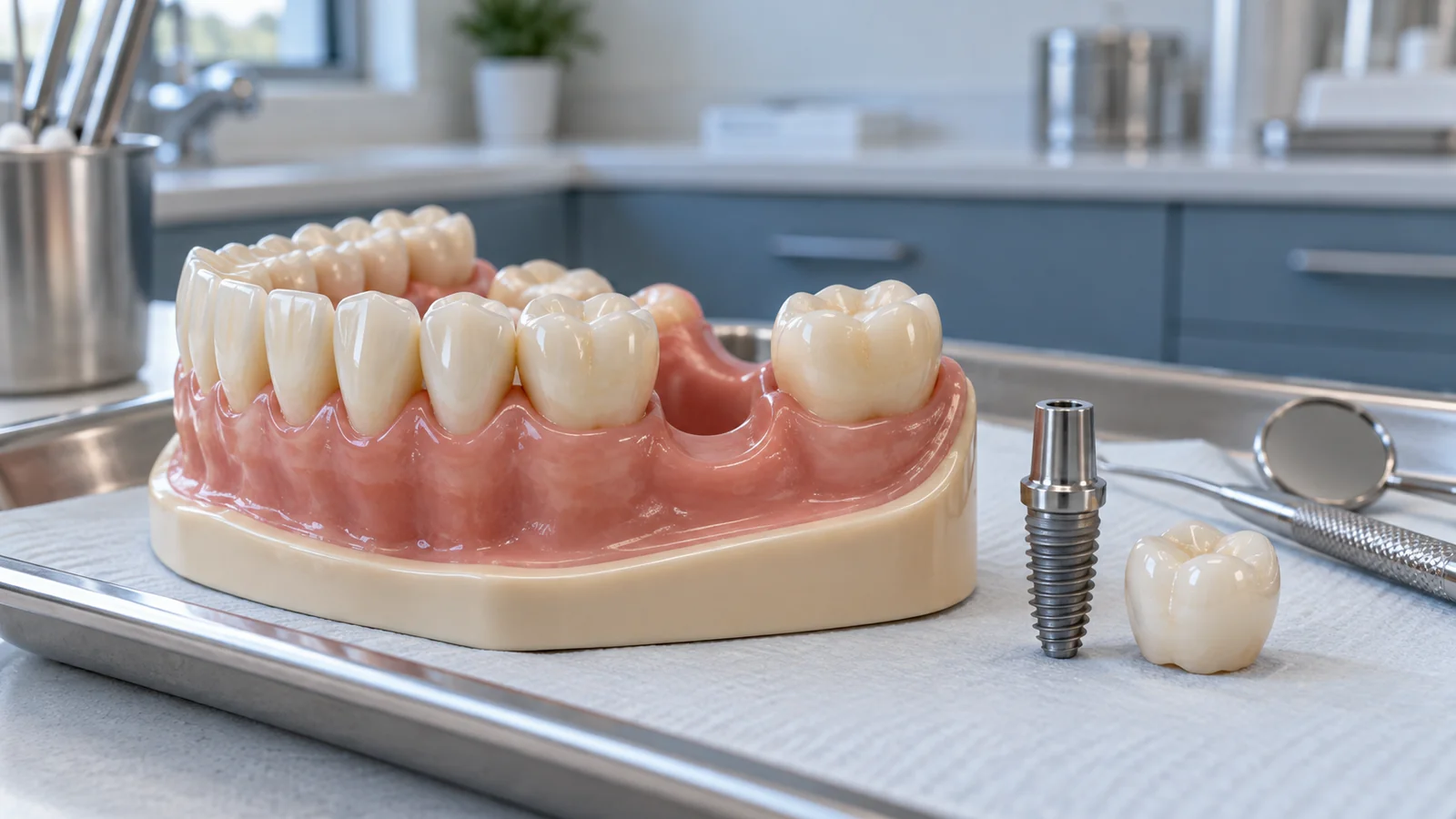
A dental implant may still be possible years after a tooth was lost. The main question is what the area is like now: the available bone, gum health, space between the remaining teeth, bite and your general health all matter. The number of years alone does not confirm or rule out treatment.
Perhaps the gap didn't bother you at first, or replacement wasn't practical at the time. You can ask about dental implants now without needing to justify why you waited.
It is reasonable to request an assessment even when a tooth has been missing for a long time. An assessment is an opportunity to understand the current options, not a commitment to surgery.
There isn't a calendar deadline that can answer the question for every adult. Two people who lost a tooth in the same year may have very different mouths and different replacement choices today.
An implant replaces the missing root and supports a replacement tooth. That means the planning has to consider both the implant's support and the space for the visible tooth above it.
The Canadian Dental Association's dental implant information identifies healthy gums, adequate jawbone and general health as relevant considerations. Those findings require an individual assessment.
If you were advised against an implant years ago, explain why, if you know. Ask whether the reason still applies rather than assuming either that nothing has changed or that treatment must now be possible.
The area around a missing tooth may change over time. Bone can reduce in volume, and neighbouring teeth may move. These are possibilities to assess, not a prediction that everyone with an old gap will experience the same changes.
You may have noticed food catching differently, a change in the visible space or a difference when chewing. Mention those observations, even if they haven't caused pain.
The American Dental Association's information on missing teeth explains that tooth loss can affect chewing and that remaining teeth can shift. A gap that looks small from the front may need more detailed assessment of the surrounding teeth and roots.
The dentist also needs to understand why the tooth was lost. An injury, decay and gum disease provide different histories. Any current disease or damage elsewhere in the mouth may influence the replacement plan.
Don't assume a long-standing gap is harmless because you've adapted to it, or that serious deterioration is inevitable. Both conclusions go beyond what you can tell from the age of the gap alone.
The consultation starts with your history and priorities. Explain when the tooth was lost, any treatment at the time and whether you've worn a replacement since.
The dentist can then examine the gap, nearby teeth, gums and bite. Imaging may be recommended to assess structures that are not visible during a routine look inside the mouth.
Available space matters in more than one direction. Planning must account for the position of surrounding teeth and the relationship with teeth in the opposite jaw, as well as support for the implant.
Bring an up-to-date medication list and describe relevant health changes. Mention tobacco use and any previous healing problems. These details help the clinician assess treatment considerations without relying on assumptions.
You might also explain what has prompted the appointment now. Is chewing difficult? Has a removable replacement become uncomfortable? Would you simply like to understand your choices?
Downtown Whitby Dentistry provides information about dental implants in Whitby. An assessment can establish what would need to be considered for your existing gap and whether another professional should be involved.
Sometimes the assessment identifies something that needs attention before an implant can be considered. The recommendation should explain the finding and how it affects the proposed replacement.
If there is insufficient bone, grafting may be discussed in selected cases. A graft is intended to build or support bone in the area, but it is not required for every old gap and is not suitable for every person.
If nearby teeth have moved, the available space may need further evaluation. Gum disease or problems with remaining teeth may also need attention as part of planning.
Ask whether the additional care is necessary for an implant, whether it would be recommended independently and who would provide it. Those are different questions.
More preparation can mean more appointments, healing time and cost. Ask for the proposed sequence and what would determine progression from one stage to the next.
A plan should also explain its limits. Additional treatment does not guarantee that an implant will be successful or that the final result will match a photograph you've seen. You should understand the expected benefit and the reasons for uncertainty in your own case.
An implant is one possible approach, not the only topic worth discussing. Depending on the findings, a bridge, a removable replacement or an individualized monitoring plan may also be considered.
A bridge uses supporting teeth or implants to hold replacement teeth in place. If natural teeth would provide that support, ask how those teeth would be affected. Their existing condition is relevant to the decision.
A removable replacement is taken out for care. Ask how it would be supported, how you would handle it and what it might feel like during eating and speaking.
An implant-supported tooth has its own planning, surgical and maintenance requirements. Ask how you would clean around it and what future review or repairs might involve.
If you prefer not to replace the tooth now, ask what monitoring would involve and what changes should be reported. Choosing to wait should follow a discussion of your mouth and goals, rather than an assumption that doing nothing has no implications.
Compare the options around the things that matter to you: chewing, appearance, effects on nearby teeth, daily care, treatment stages and cost. No single feature answers the whole decision.
It is also reasonable to ask which option the dentist considers most appropriate and why. The explanation should connect the recommendation to the findings, not simply to the fact that a tooth is missing.
You don't need to arrive knowing whether you want an implant. Bring questions that help you understand the old gap as it is today:
Ask whether the estimate covers the whole proposed process, including any preparatory care and the replacement tooth. A price for one stage may not describe the total treatment.
Discuss practical constraints, too. Work, caregiving, travel or anxiety about dental treatment can affect how manageable a plan feels. The team can explain the proposed sequence without promising a fixed finish date.
If the answer is that an implant is not appropriate, ask what finding led to that conclusion and what alternatives remain. A useful consultation should still leave you with a clearer understanding of the gap and your choices.
It may be possible, but ten years is not enough information to decide. The dentist needs to assess the current bone, gums, space, surrounding teeth and your health. Ask for an evaluation rather than assuming the elapsed time settles the question.
No. Grafting depends on the bone available and the requirements of the proposed treatment. Some people may be assessed for grafting, while others may not need it or may be advised to consider a different approach.
No. An adult's age alone does not describe oral health, general health, healing considerations or ability to maintain an implant. The assessment needs to consider those individual factors.
Their position becomes part of the replacement plan. Ask how the movement affects available space, the bite and the options for care. Don't assume that an implant can simply be placed in whatever space remains.
There may be. Depending on the mouth and the missing tooth, a bridge, removable replacement or monitoring may be discussed. Ask about the benefits and limitations of the options relevant to you.
A long-standing gap is a reason to seek current information, not a reason to rule yourself out before an assessment. Contact Downtown Whitby Dentistry to discuss the tooth you've lost and the options available now.
Bring any previous advice or records you have, along with your priorities. The aim is to understand a plan that fits today's findings and your needs.



OUR HOURS
| Monday | 9:00 AM to 5:00 PM |
| Tuesday | 9:00 AM to 5:00 PM |
| Wednesday | 9:00 AM to 3:00 PM |
| Thursday | 9:00 AM to 5:00 PM |
| Friday | 9:00 AM to 1:00 PM (By Appointment) |
| Saturday | CLOSED |
| Sunday | CLOSED |
130 Byron St. North
Whitby, ON, L1N 4M9
905-430-7045
info@dwdentistry.ca
Request Appointment
Share or Read a Google Review

© 2026 Downtown Whitby Dentistry| All Rights Reserved - Website design by Vitamin D - Marketing & Design

