
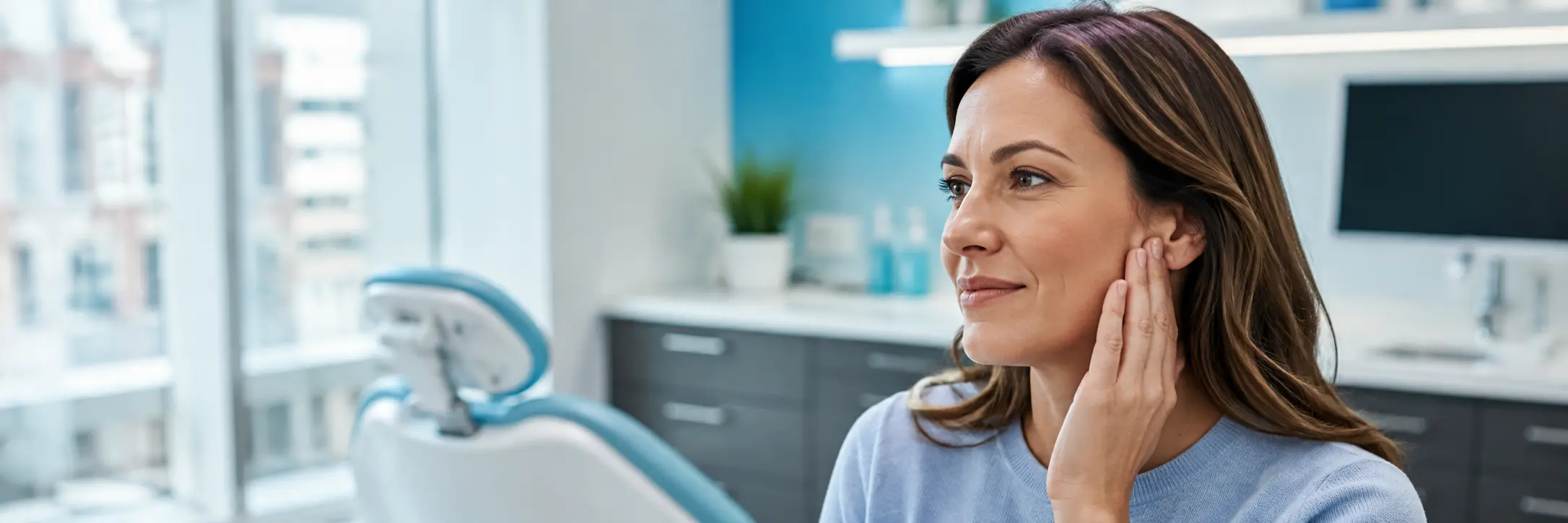
Jaw discomfort, recurring headaches, clicking sounds and difficulty chewing can interfere with everyday life. At Downtown Whitby Dentistry, we assess the possible causes of TMJ-related symptoms and develop a personalized treatment plan to help improve comfort and jaw function.
A dentist can assess jaw pain, clicking, headaches, facial tension, teeth grinding, and bite-related symptoms to help determine whether they may be connected to the jaw joints or surrounding muscles. At Downtown Whitby Dentistry, a TMJ assessment may include a review of your symptoms, bite, jaw movement, teeth, and oral health history before treatment options are discussed.
The temporomandibular joints, commonly called the TMJs, connect your lower jaw to your skull. These joints work together with the surrounding muscles whenever you speak, chew, swallow or yawn.
When a joint or its supporting muscles are strained or not functioning properly, it may lead to a temporomandibular disorder, often referred to as TMD or simply a TMJ disorder. Symptoms can develop gradually or appear following an injury, increased stress, teeth grinding or changes in the way your teeth come together.
TMJ-related symptoms vary from person to person and may affect one or both sides of the face.
TMJ discomfort does not always have one identifiable cause. It may be related to a combination of joint, muscle, dental and lifestyle factors.
Because headaches, facial discomfort and jaw pain may have several possible causes, an assessment is an important first step. Our Whitby dental team will listen to your concerns, review your dental and health history and examine how your teeth, jaw joints and facial muscles are functioning.
Treatment depends on your symptoms, their possible causes and the results of your assessment. Whenever appropriate, care may begin with conservative options intended to reduce strain and support more comfortable jaw movement.
For appropriate patients, Botox® therapeutics may be considered as part of a broader treatment plan for jaw clenching and overworked facial muscles. It works by temporarily reducing activity in selected muscles that may be contributing to tension and discomfort.
Botox® is not appropriate for every type of TMJ disorder. A consultation is required to determine whether your symptoms appear to be muscle-related and whether this treatment may be suitable for you. Learn more about Botox® therapeutics at Downtown Whitby Dentistry.
Consider scheduling an assessment if jaw pain, clicking, locking, headaches, facial tension, or teeth grinding are affecting your comfort or daily routine. A dentist can assess your jaw joints, bite, teeth, and symptoms to help determine whether TMJ-related care may be appropriate. To request a TMJ assessment, please contact Downtown Whitby Dentistry or call 905-430-7045.
TMJ refers to the temporomandibular joint that connects the lower jaw to the skull. TMD stands for temporomandibular disorder and describes conditions affecting the jaw joints, chewing muscles or both. Many people commonly use the term TMJ when referring to jaw pain or a TMJ disorder.
Common TMJ disorder symptoms include jaw pain or stiffness, facial discomfort, difficulty chewing, limited jaw movement, jaw locking and painful clicking or popping. Some people also experience headaches, ear-area discomfort or tension in the neck and shoulders. Clicking without pain is common and may not require treatment.
Yes. A dentist can assess the jaw joints, chewing muscles, teeth and bite to help determine whether your symptoms may be related to a temporomandibular disorder. At Downtown Whitby Dentistry, we begin with an assessment and recommend care based on your symptoms and individual needs.
TMJ pain does not always have one identifiable cause. Symptoms may be associated with an injury, overworked jaw muscles, arthritis, teeth grinding, jaw clenching, stress or a combination of factors. Because facial and jaw pain can also have other causes, an assessment is important before beginning treatment.
Teeth grinding and jaw clenching can overwork the chewing muscles and may aggravate jaw pain, stiffness or headaches. Signs may include worn teeth, morning jaw fatigue or tenderness around the temples. A dental examination can help identify signs of grinding and determine whether an oral appliance or another treatment may be appropriate.
During a TMJ assessment, our dental team will discuss your symptoms, when they occur and what makes them better or worse. We may examine your jaw movement, joints, facial muscles, teeth and signs of grinding or clenching. Diagnostic imaging or a referral to another healthcare provider may be recommended when appropriate.
TMJ treatment depends on the type and possible cause of your symptoms. Recommendations may include reducing habits that strain the jaw, temporary dietary changes, a custom oral appliance, treatment for damaged teeth or Botox® therapeutics for selected muscle-related symptoms. Downtown Whitby Dentistry focuses on personalized and conservative care whenever appropriate.
Yes. Downtown Whitby Dentistry offers Botox® therapeutics, which may be considered for appropriate patients with muscle-related jaw tension or clenching. Botox® is not suitable for every type of TMJ disorder, so a consultation is needed to determine whether it may be an appropriate part of your treatment plan.
Consider scheduling an assessment if jaw pain persists, interferes with chewing, limits movement or is accompanied by painful clicking, locking or recurring headaches. To request a TMJ consultation at Downtown Whitby Dentistry, complete our appointment request form or call 905-430-7045.
If you are experiencing ongoing jaw discomfort, frequent headaches, clenching or difficulty chewing, our team can assess your concerns and discuss your options.



OUR HOURS
| Monday | 9:00 AM to 5:00 PM |
| Tuesday | 9:00 AM to 5:00 PM |
| Wednesday | 9:00 AM to 3:00 PM |
| Thursday | 9:00 AM to 5:00 PM |
| Friday | 9:00 AM to 1:00 PM (By Appointment) |
| Saturday | CLOSED |
| Sunday | CLOSED |
130 Byron St. North
Whitby, ON, L1N 4M9
905-430-7045
info@dwdentistry.ca
Request Appointment
Share or Read a Google Review

© 2026 Downtown Whitby Dentistry| All Rights Reserved - Website design by Vitamin D - Marketing & Design

